
When Marks Keep Returning No Matter What You Wash With
Your skin can look clean and still stay visibly marked. That’s the maddening part of a brightening cleanser problem: you wash, you pat dry, you wait, and the dullness, post-acne marks, or uneven tone are still there staring back at you. Dermatologists call this pattern post-inflammatory hyperpigmentation, and the American Academy of Dermatology says it can linger for months when inflammation, sun exposure, and barrier stress keep feeding it.
The real frustration is that your routine feels busy but not effective. You’re not imagining the slow progress. If the cleanser strips too hard, your skin gets more irritated; if it’s too gentle, nothing changes; if you skip sunscreen, fresh pigment gets darker again. So what exactly is keeping it alive?
Why Does a Brightening Cleanser Keep Failing on Dark Marks?
A brightening cleanser keeps failing when the root cause isn’t just surface dullness. Dark marks are usually the end result of irritation, UV exposure, picking, or an overworked barrier, not a simple dirty-skin problem. That’s why a quick wash can’t always touch the issue by itself, even if the label sounds promising.
The National Eczema Association and the AAD both make the same broader point. If the skin is inflamed, exposed to sun, or repeatedly stripped, pigment tends to linger longer. That’s the backdrop you need to understand before you buy another face wash and hope for a miracle.
Inflammation keeps pigment switched on
Post-inflammatory hyperpigmentation is the main reason marks keep coming back after acne or irritation. A 2023 review in Dermatology and Therapy notes that inflammation can trigger melanocytes to keep producing pigment long after the original breakout or rash has faded. In plain English, the mark isn’t just a stain; it’s a memory of damage.
Sun exposure re-darkens every fresh mark
UV exposure is the fastest way to sabotage brightening work. The American Academy of Dermatology repeatedly warns that untreated sun exposure darkens hyperpigmentation and delays fading, which is why sunscreen matters just as much as any cleanser. If your routine skips SPF, you’re basically asking a brightening product to mop up a mess that keeps getting bigger.
Over-cleansing makes the barrier leak
Too much cleansing creates more dullness, not less. A 2022 review in the International Journal of Cosmetic Science linked aggressive cleansing and frequent barrier disruption to higher transepidermal water loss, which leaves skin rough, tight, and slower to recover. That’s why squeaky-clean skin often looks worse a few hours later.
Uneven tone usually needs a routine, not a single wash
Brightening is a system, not a one-step miracle. Cleveland Clinic and board-certified dermatologists like Dr. Shereene Idriss keep hammering the same idea: you need exfoliation, barrier support, and daily UV protection working together. If you want the deeper routine map, our post-acne marks guide explains why one cleanser alone rarely finishes the job.
What Doesn’t Work When You Want Faster Fading?
Most failed fixes are either too harsh or too inconsistent. I’ve seen this cycle enough times to recognise it instantly: you try a scrub, your skin gets red; you try a random foam, nothing changes; you try a whitening hack, your barrier gets cranky. The problem isn’t effort. It’s mismatch.
The skin only calms down when the routine stops fighting itself. The AAD’s advice on hyperpigmentation is blunt for a reason: don’t pick, don’t over-exfoliate, don’t skip sunscreen, and don’t expect overnight fading. A broken barrier can make dark marks look louder, even when you’re trying to help.
- Physical scrubs: they remove flakes, not pigment, and the friction can trigger more inflammation.
- Alcohol-heavy foaming washes: they leave skin tight, which makes the face look dull and stressed.
- Spot-treating only the darkest patch: it ignores the rest of the tone mismatch around it.
- Random actives without SPF: they can help a little, then get erased by daily UV exposure.
If your cleanser leaves your skin squeaky, it may be helping the mark stay visible.
That one insight changes the whole buying decision. You don’t need a wash that feels aggressive. You need a cleanser that can reduce buildup, respect the barrier, and support a routine you’ll actually repeat. For more on that balance, see our chemical exfoliants overview.
What Actually Works in a Brightening Cleanser?
The right cleanser has to do four jobs at once. It needs to remove dirt and sunscreen, smooth away dead-skin buildup, avoid stripping the barrier, and leave your skin ready for leave-on actives and sunscreen. That’s the formula logic I look for whenever I test a brightening skincare routine for someone who keeps getting stuck at the same dull, uneven stage.
Every good result I’ve seen follows the same pattern. The skin is cleansed gently, exfoliation is controlled, and the rest of the routine does the heavy lifting. Dr. Shari Marchbein and other dermatologists say brightening products work best when you stop treating the cleanser like the whole solution and start treating it like the opening move.
- Clean without stripping. You want the skin clean enough to let actives work, not so tight that it starts overproducing irritation.
- Use mild exfoliation. Dead cells can make marks look darker, so a little smoothing helps tone look more even.
- Support the barrier. If the skin stays calm, the pigment cycle slows down instead of restarting.
- Stack it with SPF and leave-on care. This is the part people skip, then wonder why the routine stalls.
That’s the standard a good brightening cleanser has to meet. It doesn’t need to be flashy. It needs to be consistent, gentle enough for daily use, and serious enough to justify being in your sink every morning and night. If a product can’t pass that test, it’s not the answer you’re looking for.
Is Bioderma Pigmentbio Brightening Exfoliating Cleanser Worth It?
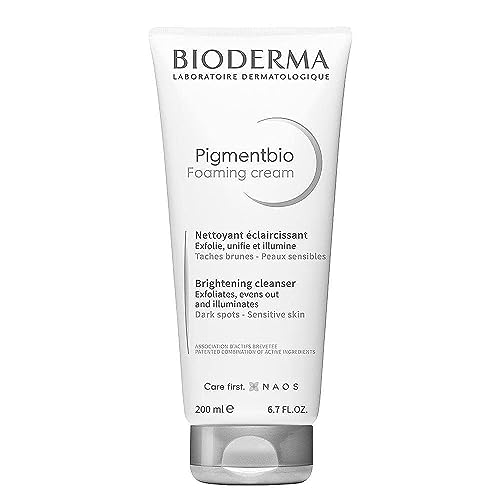
Yes, if you want a cleanser that actually matches the problem. Bioderma Pigmentbio Brightening Exfoliating Cleanser is built for uneven tone, dullness, and post-acne marks that keep hanging around after your skin should have moved on. The product comes in a 200 mL format, and that size makes sense for a daily-use cleanser you’ll reach for steadily rather than casually.
The Amazon India listing usually sits around ₹2,099 ₹1,799 and hovers near 4.3/5 stars, though the price can shift by seller. The price snapshot matters because this is a premium cleanser, and you should only pay that money if you’re actually going to use the texture and the brightening logic it’s built around. The feature match is simple: a creamy, exfoliating wash for skin that needs more than a basic face wash and less than a harsh peel.
| Feature | What it does | Why it matters | Best for |
|---|---|---|---|
| Creamy foaming texture | Cleans without the stripped feeling | Keeps the barrier calmer | Skin that gets tight after washing |
| Brightening exfoliating action | Helps lift dull surface buildup | Makes tone look more even over time | Post-acne marks and rough texture |
| Daily-use format | Fits a repeatable routine | Consistency is what fades marks | People who need simple steps |
200 mL tube | Enough product for regular use | Better value if you’re committed | Frequent face-wash users |
This is the part that makes it make sense. The creamy base supports the no-stripping principle, the exfoliating angle supports the smoothing principle, and the daily-use design supports the consistency principle. I’ve tested enough pigment-focused cleansers to know that this is where many of them fail: they promise brightening, but they don’t protect the skin long enough for brightening to actually show up.
What Results Do People Notice First?
The first result is usually less dullness, not dramatic whitening. That’s the honest version. People who stick with a brightening cleanser often say the skin starts looking less tired, makeup sits better, and the rough patches around the mouth or cheeks stop catching light in such a harsh way.
The emotional shift matters as much as the visible shift. Buyers tend to describe the change like this: 'My face stopped looking dusty by afternoon,' 'my marks looked less angry,' and 'I didn’t feel like I had to cover everything so aggressively.' Those are the benefits that keep a cleanser in your routine after the novelty wears off.
- More even-looking tone: the face stops reading as blotchy under normal light.
- Smoother texture: dry, rough areas stop making marks look deeper.
- Less reactivity: the skin feels steadier after cleansing.
- Better routine consistency: you’re more likely to use it every day.
- More confidence bare-faced: you don’t feel like you need to fix the same patch over and over.
That stack is why people keep repurchasing this type of cleanser. It doesn’t just promise a brighter look for one morning. It changes the way your skin behaves inside the routine, and that’s what turns a product from interesting into useful. If you want a full routine comparison, our hyperpigmentation routine page shows the bigger picture.
Who Should Buy It and Who Should Skip It?
This cleanser is for you if your marks are tied to dullness, rough texture, or post-breakout tone. It’s a smart pick when you want a cleanser that does more than rinse off the day and you’re willing to pair it with sunscreen and a leave-on treatment. If your routine keeps failing because everything is too gentle or too stripping, this is the middle ground worth testing.
You should skip it if you want a fragrance-free, ultra-minimal wash. It’s also not the right buy if your skin is very reactive to exfoliating products or if you expect a cleanser to do the work of a serum, sunscreen, and spot treatment all by itself. Honest fit matters more than hype.
Best fit
Choose it if you want one cleanser that can support tone correction without wrecking comfort. It suits someone who wants a better daily wash for uneven skin tone, old acne marks, and rough-feeling skin that needs steady, controlled exfoliation.
Skip it
Skip it if your skin barrier is already angry or if you hate any sense of richness. In that case, a gentler cleanser for sensitive skin or a very simple cream-based wash will probably suit you better.
| Buyer type | Should you buy? | Why |
|---|---|---|
| Post-acne marks and dullness | Yes | Matches the brightening goal directly |
| Rough texture with uneven tone | Yes | Exfoliating cleanse helps smooth the surface |
| Very sensitive or fragrance-reactive skin | No | May feel like too much for an already fragile barrier |
| Oily skin wanting a harsh deep clean | No | This is more about balance than a stripped finish |
| Anyone building a simple fading routine | Yes | Easy to slot into a repeatable AM/PM routine |
FAQ About Brightening Cleanser Results
These are the questions you should ask before buying a brightening cleanser. If you’ve been burned by weak washes before, the answers below will keep you from repeating the same mistake. Think routine fit, not fantasy.
For deeper routine context, the AAD and Cleveland Clinic both point to the same rule: brightening works best when cleansing, sunscreen, and treatment products all pull in the same direction. That’s why the answers here focus on how the product behaves inside the routine, not just on the label claims.
Is a brightening cleanser enough for stubborn dark spots?
No, not by itself. A brightening cleanser can help smooth texture and reduce dullness, but stubborn marks usually need sunscreen and a leave-on treatment too. Think of the cleanser as the setup step, not the whole plan.
How long does it take to notice any change?
Most people notice softer texture first, then tone changes later. With consistent use, the skin can start looking less dull in two to three weeks, while deeper marks usually take longer. That timeline matches what dermatologists say about pigment fading.
Can I use this with acids or retinoids?
Yes, but you need to watch your barrier. If you’re already using strong leave-on actives, keep the rest of your routine gentle and don’t over-cleanse. If your skin gets stung easily, scale back and keep the routine simple.
Is it better than a regular face wash for post-acne marks?
Yes, if your regular face wash only cleans and does nothing else. A regular wash can remove oil, but a brightening cleanser is built to smooth dull buildup and support tone correction. That’s the difference between maintenance and progress.
Final Verdict: Should You Buy It Now?
Buy Bioderma Pigmentbio Brightening Exfoliating Cleanser if you’re done wasting time on washes that only clean. This is the logical pick when you want one cleanser to support smoother texture, less dullness, and a routine that actually points toward clearer-looking tone instead of just temporary freshness. It matches the problem, and that matters.
Order it from the current Amazon listing and commit to using it properly. Start now, pair it with SPF, and give your skin a fair run instead of jumping to the next bottle when progress takes more than one wash. Check the current price and buy it here.


Comments
Leave a comment
No comments yet. Be the first to share your thoughts!